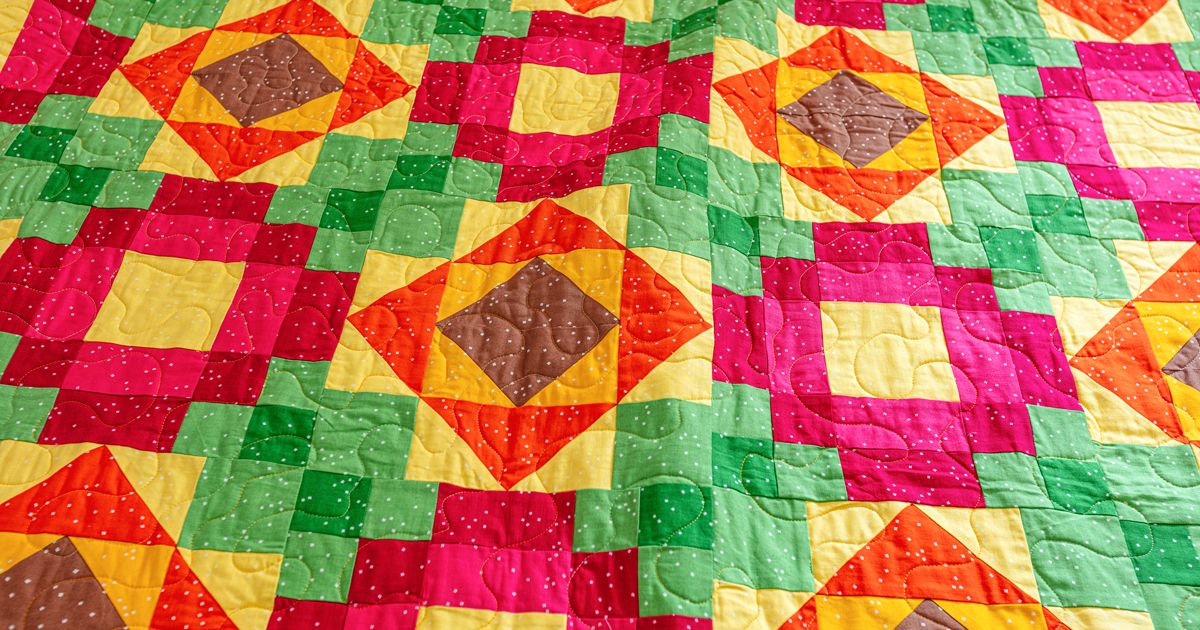
I hate to admit it to myself and to others, but I really did just ruin a small pillow top by machine quilting it. You read correctly: I ruined a perfectly nice piece of patchwork. The stitching is crooked, the thread is blah, the quilting takes away from the design rather than enhancing it, and the workmanship is not the best. I can only blame myself--I achieved lack-luster results all because I didn't follow my own self-imposed "rules" for quilting.
I've been thinking long and hard about investing in a new machine specifically for quilting my larger pieces. But in the back of my head I know that no matter what machine I have or how much time and effort I spend in learning how to use it, I will never create pieces that are of show-stopping quality if I don't follow some basic steps before starting to stitch.
So are there really rules for machine quilting? Maybe not hard-and-fast rules, but when I do follow a few guidelines I get better results. And this time, I think I broke every single one of them.
My own internal checklist has me answer a few simple questions before I get started.
- Plan the design before you start. If I had taken a few minutes to relate the quilting pattern to the quilt top, the overall result would have been significantly better.
- Fill an extra bobbin or two. This ensures there is enough thread for the project and minimizes stopping and starting as you wind bobbins and rethread your machine.
- Practice on a small quilt sandwich before quilting on the final project. 10 minutes of practice usually gets me "in the groove" to stitch any design with confidence. Instead, I practiced on my project, and the results are inconsistent design details and stitch length.
- Pull the bobbin thread to the top to avoid unsightly nests underneath your work. Ugh, that happened twice.
- Always move the work away from you so you can see where you are going. I got lazy and tried to quilt by moving the work toward me on alternating rows of quilting. The results speak for themselves...
- Relax. My shoulders were tight after only a few minutes of quilting. Relaxing makes a big difference in the quality of the stitching.
Better than my advice is to review the incredible wealth of information from the real experts. My go-to source for inspired designs and practical quilting advice is past articles in Quilting Arts Magazine from contributors like Robbi Joy Eklow, Frieda Anderson, Judy Coates Perez, and Carol Taylor. There's even a free machine quilting eBook available on our website, packed with advice for quilters of all levels.
How do you prepare for quilting? Do you plan everything ahead, or do you just jump in and stitch? Leave a comment on the blog and let us know.